Historical Background & Establishment
Houtouwan was established in the 1950s as a thriving fishing village on Shengshan Island, part of the Shengsi Archipelago in China's Zhejiang Province. At its economic peak in the 1980s, the village supported more than 3,000 residents, primary schools, markets, and regional fish-processing operations.
Causes of Exodus
Despite its prosperous coastal location, Houtouwan suffered from extreme geographical isolation. The steep hilly terrain prevented modern roadway construction, requiring goods and fish harvests to be carried on foot over steep stone staircases. Furthermore, the small bay could not accommodate larger steel-hulled fishing vessels modernizing the East China Sea fleet. By the early 1990s, families systematically relocated to neighboring urban centers on the mainland.
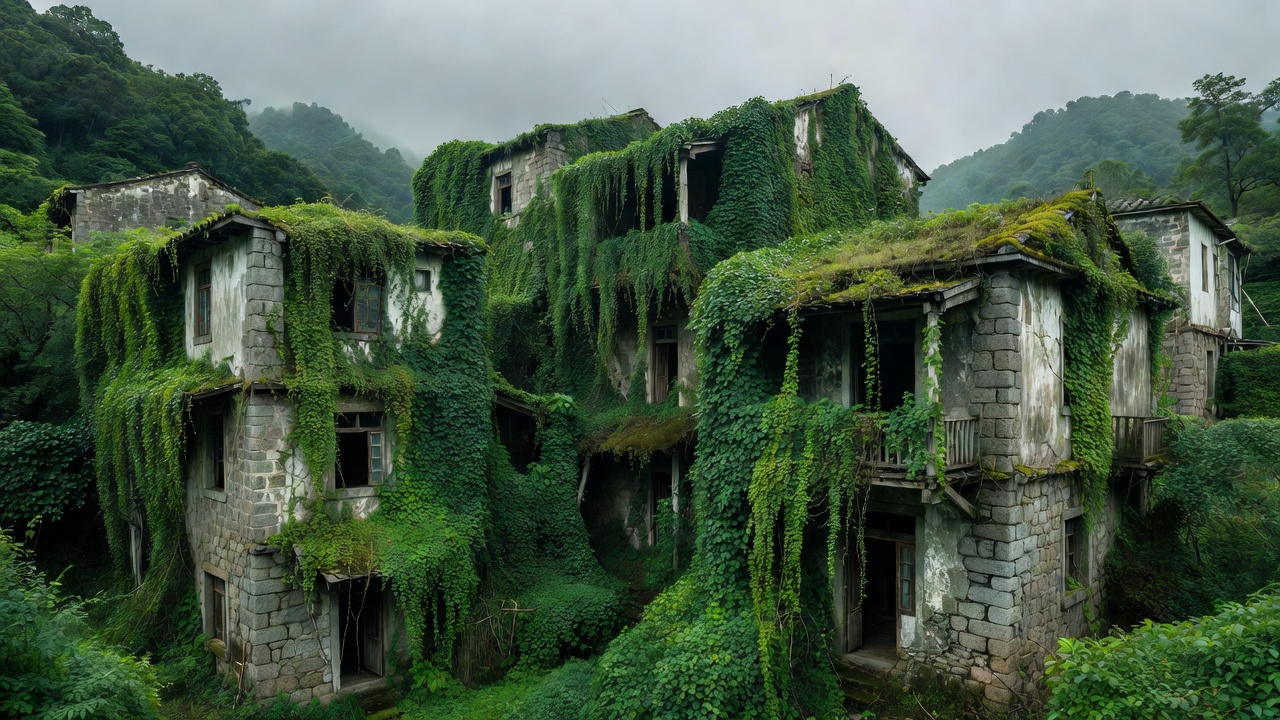
"By 2002, the village was officially depopulated. Unchecked humidity and subtropical rainfall allowed Parthenocissus tricuspidata (Boston Ivy) to consume every architectural facade."
Architectural Integrity & Natural Reclamation
Unlike mudbrick or wooden structures, Houtouwan's homes were built using dense granite blocks and concrete mortar to withstand typhoon winds. Because the structural frames remained sound, climbing vines covered the roofs, doorways, and balconies without causing immediate collapse. This creates a rare phenomenon: intact two- and three-story residences fully cloaked in emerald foliage.
Preservation Status
Currently, the site is managed under strict environmental guidelines by the local tourism authority to prevent structural decay and protect regional avian ecosystems that nesting among the vine-draped ruins.